Maintenance
Automotive Service Technicians: What They Actually Do


An automotive service technician inspects, diagnoses, repairs, and maintains mechanical, electrical, and electronic vehicle systems. In Ontario, the role may involve apprenticeship and recognized authorization routes such as a Registered Training Agreement, Provisional Certificate of Qualification, or Certificate of Qualification.
For a vehicle owner, the important question is whether the technician can identify the problem carefully, explain the evidence, outline the options, and obtain approval before repair work begins.
What an Automotive Service Technician Does
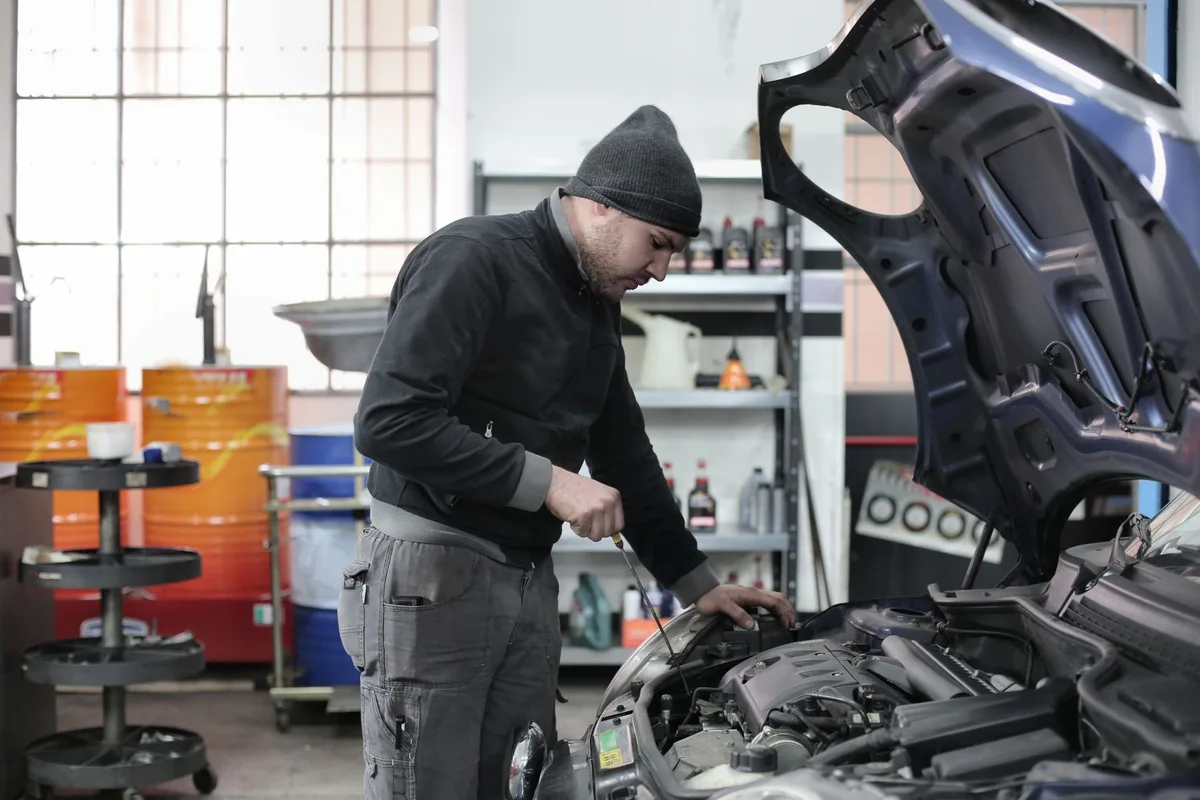
An automotive service technician works on the systems that help a car or light truck start, move, stop, steer, cool, and operate safely. The work includes preventive maintenance, inspections, fault diagnosis, repairs, adjustments, and post-service verification.
Ontario automotive service technicians inspect, diagnose, repair, and service mechanical, electrical, and electronic systems in cars, buses, and light and commercial transport trucks. Their work therefore extends beyond replacing worn parts. It also involves interpreting symptoms, testing systems, and deciding which repair the findings support. Ontario motor vehicle repair requirements describe this broad scope.
A typical visit might involve an oil and filter change, brake inspection, battery test, tire and wheel check, alignment measurement, warning-light diagnosis, cooling-system assessment, suspension inspection, or a complex transmission or fuel-system repair. The right first step depends on the vehicle’s symptoms, history, condition, and maintenance schedule.
Automotive Service Technician vs. Mechanic
“Mechanic,” “auto technician,” and “automotive service technician” often describe the same kind of professional in everyday conversation. The formal trade wording emphasizes that modern vehicle service includes computer-controlled, electrical, and electronic systems as well as traditional mechanical work.
| Term | Usual meaning | What drivers should know |
|---|---|---|
| Automotive service technician | A broad description of someone who services, diagnoses, repairs, and maintains vehicle systems. | The work can include mechanical, electrical, electronic, diagnostic, and preventive maintenance tasks. |
| Mechanic | A familiar everyday term for someone who repairs and maintains vehicles. | The title alone does not show the person’s training, scope, or authorization. |
| Auto technician | A shortened form of automotive service technician. | It commonly refers to the same broad vehicle-service role. |
A motor vehicle mechanic is not necessarily a different type of worker from an automotive service technician. Ask about the specific service, diagnostic process, experience with your vehicle, and relevant authorization instead of judging a provider by the title alone.
How Technicians Train and Qualify in Ontario
Ontario does not reduce automotive service work to a university degree. Workplace learning and apprenticeship are important routes into the trade, followed by the authorization pathway that applies to the trade and the person’s situation.
Ontario identifies several authorization routes for compulsory trades: a Registered Training Agreement, a Provisional Certificate of Qualification, or a Certificate of Qualification. Ontario’s current compulsory-trade requirements explain the applicable conditions.
Training commonly combines technical learning with supervised practical experience. Requirements, examinations, and authorization conditions depend on the trade and the individual’s status, so not every technician should be assumed to hold the same certificate.
Do you need a degree to become a mechanic?
A university degree is not the only route into automotive service work in Ontario. Apprenticeship and recognized trade authorization pathways are central options, although the requirements for a particular role should be confirmed with the relevant authority or employer.
The Work Covers More Than Repairs
Preventive maintenance helps identify wear, fluid concerns, maintenance needs, or developing faults before they become a breakdown or a larger repair.
- Routine maintenance: oil and filter changes, fluid checks, filters, belts, hoses, and tune-ups.
- Safety-related service: brakes, tires, wheels, steering, suspension, lights, and inspections.
- Diagnosis: warning lights, starting problems, electrical faults, drivability concerns, and unusual noises.
- Repair: batteries, cooling systems, exhaust, heating and air conditioning, transmissions, drivetrains, and fuel systems.
- Commercial support: planned maintenance and repair coordination for local fleets.
An oil change illustrates why the service is broader than one replacement task. A complete visit may involve oil and filter replacement, fluid checks, and a basic inspection for leaks or worn components.
Which Appointment Fits the Problem?
Book an inspection or diagnostic appointment when the cause is uncertain instead of choosing a replacement part based on one symptom. A technician can then determine whether the vehicle needs routine maintenance, targeted testing, a safety inspection, or urgent repair.
| Symptom | First step | What may be examined | What to report |
|---|---|---|---|
| Steady warning light | Book diagnostic testing soon. | Codes, live data, wiring, sensors, engine operation, and related components. | The light, when it appeared, and any performance change. |
| Flashing warning light or severe drivability problem | Stop safely and seek prompt guidance. | The affected system and whether continued driving could worsen the problem. | Flashing pattern, power loss, shaking, smoke, or unusual smell. |
| Brake noise or changed pedal feel | Arrange a brake inspection. | Pads, rotors, calipers, hardware, fluid, hoses, and pedal operation. | When the sound occurs, plus pulling or vibration. |
| Slow starting, clicking, or no-start | Request starting and charging tests before buying a battery. | Battery, terminals, starter, alternator, cables, and electrical draw. | How long it has occurred and whether boosting helped. |
| Overheating or coolant loss | Stop driving if the temperature rises dangerously or steam appears. | Leaks, radiator, hoses, thermostat, fan, water pump, and temperature control. | Warning lights, leaks, steam, smells, and recent coolant top-ups. |
| Pulling, loose steering, or poor handling | Book a steering, suspension, tire, and alignment assessment. | Steering components, suspension joints, tires, wheel angles, and wear. | When it happens and whether a pothole or curb was recently struck. |
| Uneven tire wear | Request an inspection before alignment alone. | Tire condition, suspension, steering, balance, and alignment angles. | Which tire is affected and where the wear appears. |
Technicians often begin with vehicle safety inspections covering brakes, tires, suspension, alignment, and electrical systems. Handling complaints or uneven wear may also require wheel alignment services, but alignment should not substitute for diagnosing a damaged component.
How a Professional Diagnosis Should Proceed
A proper diagnosis connects your reported symptom to inspection findings and targeted testing. A code, noise, or visibly worn part may identify where to investigate, but it does not always prove which component caused the problem.
- Record the history: explain when the symptom occurs, what changes it, recent repairs, warning-light timing, smells, noises, road speed, braking, and turning.
- Inspect the vehicle: the technician may check fluids, wiring, tires, brakes, leaks, battery connections, and related systems.
- Test the suspected system: testing may include scan-tool data, electrical measurements, battery and charging tests, pressure tests, road tests, brake measurements, or alignment measurements.
- Explain the findings: ask what failed and what evidence supports the conclusion.
- Define the estimate: clarify parts, labour, total cost, approval limits, and what happens if further damage is found.
- Verify the repair: the original concern should be checked where practical, with remaining maintenance needs explained.
Routine Maintenance Depends on More Than Mileage
Start with the manufacturer’s schedule, then consider vehicle age, mileage, condition, and use. Mileage does not describe every driving environment or form of wear.
- Vehicle age: seals, hoses, rubber components, batteries, and corrosion concerns change over time.
- Short trips: repeated cold starts create a different maintenance pattern from highway driving.
- Heavy traffic: frequent stopping and idling affect brakes, fluids, tires, and cooling demands.
- Winter conditions: salt, potholes, cold starts, and temperature changes affect tires, brakes, batteries, steering, and suspension.
- Towing or heavy loads: extra demand affects brakes, tires, cooling, drivetrain components, and suspension.
- Fleet use: repeated routes and multiple drivers make consistent records and planned inspections valuable.
For a commercial vehicle, a documented routine should identify each vehicle, record service and defects, assign approval responsibility, and define what happens when a warning light or safety concern appears. Operators can also review commercial-vehicle preventive maintenance checks.
How to Evaluate a Technician or Repair Shop
A trustworthy provider should explain what service fits your concern and why. A long service menu is less useful than a clear process for inspection, diagnosis, estimates, approval, and follow-up.
- Ask whether the shop handles your vehicle and the system causing concern.
- Find out whether diagnosis comes before major parts replacement.
- Ask what testing supports the recommendation.
- Request an estimate separating inspection, diagnosis, parts, labour, and additional approval.
- Ask which work is urgent and what risk comes with delaying it.
- Look for explanations in language you understand, not only a code or part name.
- Clarify what will be checked after repair and what maintenance comes next.
Distinguish a general health inspection from a regulated safety certificate or another formal inspection. Ask exactly what inspection you are booking and what document or result it provides.
What Local Service Looks Like at Master Mechanic East York
Master Mechanic East York is located at 8 Bermondsey Rd in East York and serves East York, Leaside, and Toronto communities. The business states that it provides maintenance and repair for all makes and models, including oil and filter changes, multi-point vehicle health inspections, brakes, tires, alignments, diagnostics, batteries, cooling systems, suspension, exhaust, transmission, and fuel-system service.
The business describes its communication approach as “You talk to the mechanic.” Master Mechanic East York states that it has operated since 1982 and uses certified technicians and state-of-the-art equipment. These statements describe the business generally and do not establish that every individual technician holds the same credential.
Master Mechanic East York states that it supports fleet maintenance and offers transparent pricing. Listed weekday hours are Monday through Thursday from 7:30 a.m. to 5 p.m. and Friday from 7:30 a.m. to 4 p.m. Ask about the appointment process and current availability when arranging service.
When booking, provide the year, make, model, engine if known, mileage, warning-light status, recent work, symptom timing, and whether the vehicle is needed for commuting, family travel, or business use.
Questions to Ask Before You Approve Work
- What did you test, inspect, or measure?
- What failed, and what evidence supports that finding?
- Is the vehicle safe to drive, and is the repair urgent?
- What could happen if the repair is delayed?
- What exactly is included?
- Is this a repair, adjustment, maintenance service, or further diagnosis?
- Which work is recommended now versus later?
- What is the estimate, and what requires additional approval?
- What parts or service options are being considered?
- What should be checked or maintained next?
FAQ for Automotive Service Technician Searches
Can you become an automotive service technician without a university degree?
Yes. A university degree is not the only Ontario pathway into automotive service work. Apprenticeship, workplace training, and recognized authorization routes can be relevant, including a Registered Training Agreement, Provisional Certificate of Qualification, or Certificate of Qualification.
What should I ask before approving repairs?
Ask what was tested, what failed, how the finding was established, whether the repair is urgent, what the estimate includes, and where your approval limit applies. Also ask what should be checked after the repair.
Is a technician only needed when a vehicle breaks down?
No. Technicians also perform scheduled maintenance, safety checks, inspections, fluid service, tire and alignment work, battery testing, and early checks for worn components. Preventive service can address a developing issue before it becomes a roadside breakdown.
A Practical Next Step for East York Drivers
If you are unsure whether your vehicle needs routine maintenance, a safety check, or diagnosis, write down the symptom, timing, warning-light status, vehicle details, and recent repairs before booking. For a broader assessment, Master Mechanic East York provides vehicle safety inspection services at 8 Bermondsey Rd; describe the concern and its urgency so the team can discuss the appropriate next step.